Anatomy of a full drawer
The psychology behind keeping things we never use
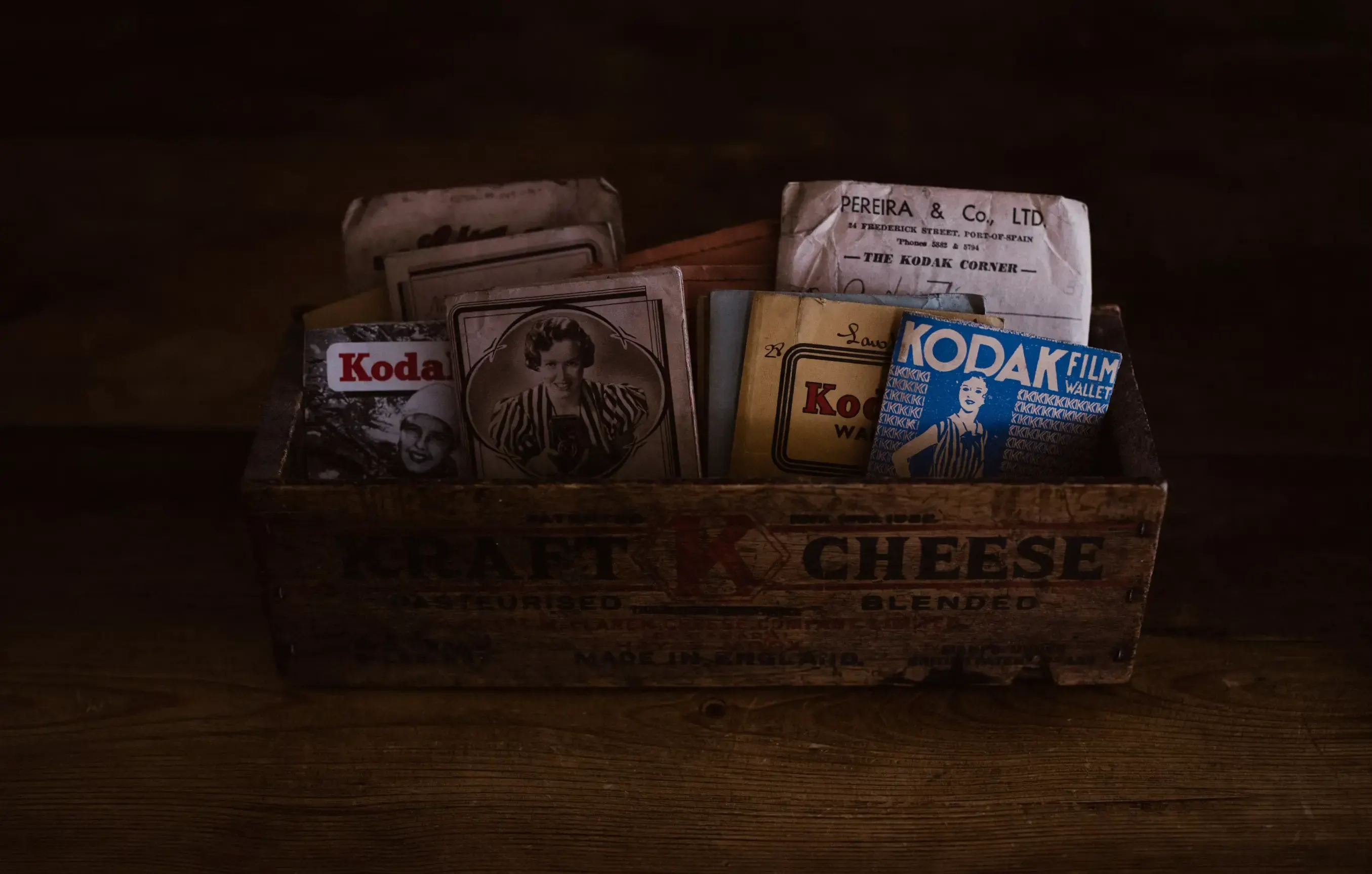
You don’t quite know what it’s for, you can’t remember when you put it there and, if it vanished tomorrow, you probably wouldn’t even notice. And yet there it stays: a cable for a device you no longer own, a key that opens nothing you can name, an empty box, an obsolete charger or a bag stuffed with other bags.
When someone suggests getting rid of it, an almost automatic reaction surfaces: «Wait, just in case?». But the analytical question is a different one: just in case what? In most cases, those objects go months, years or decades without being used again, taking up an unchanging patch of space.
Popular belief tends to put this behaviour down to poor organisation, laziness or plain untidiness. Cognitive and behavioural psychology, however, offers a far deeper reading: holding on to things we don’t need is not a failure of discipline, but a mental strategy for managing safety, uncertainty and memory.
The memory of scarcity and its invisible rules
One of the most deeply rooted reasons for keeping things is what we might call the memory of scarcity. This phenomenon appears when a person —or the caregivers who raised them— lived through periods in which the lack of a basic resource was a real problem. In settings of deprivation or economic uncertainty, replacing something broken was not an accessible option; the adaptive rule was to repair, reuse and make everything count.
When the brain learns that discarding something useful may carry a risk, it consolidates a protective pattern. Even if circumstances have changed and the object is easily replaceable today, the sense of perceived danger persists. People operating under this scheme don’t see a drawer full of junk: they see possibilities, resources and ready-made solutions to problems that don’t exist yet.
In the psychology of learning, this often shows up as intergenerational behaviour. Many people never experienced scarcity first-hand, but grew up hearing instructions like: «Don’t throw that away, it still works». Over time, those guidelines become invisible rules that keep operating implicitly, producing discomfort or guilt at the very idea of parting with something.
Reducing uncertainty: the object as a guarantee of control
There is a style of keeping that looks not to the past but to the future. For people with a high need for structure, or a tendency to anticipate adverse scenarios, uncertainty generates a state of internal tension. In those cases, stockpiling certain items works as a coping mechanism to reduce that anxiety.
Every stored object acts as a small psychological guarantee:
- «If the main cable breaks, I’ve got this spare».
- «If I need to pack something, I’ve got the box».
Even when the odds of ever using those adapters or accessories are minimal, the sheer certainty that they are available delivers an immediate sense of calm and preparedness. The object isn’t kept for its intrinsic value, but for the control it grants over an unpredictable environment. This pattern tends to coexist with behaviours such as meticulous planning, list-making and a preference for highly predictable surroundings.
The emotional anchor and the endowment effect
The third reason —and the one with the greatest emotional weight— arises when objects stop being practical tools and turn into memory anchors. A battered cinema ticket, a garment no longer worn or an old mobile phone stop being judged by their practical usefulness and become extensions of one’s own identity, or testimony to a past chapter of life.
In experimental psychology, this phenomenon is linked to the endowment effect: the biased tendency to value a good substantially more simply because we own it, and because of the emotional charge we have transferred onto it.
When an object stands for an experience, a bond or an earlier version of ourselves, letting go of it isn’t processed as a logistical decision about tidying up, but as a personal loss. What is hard to release is not the physical matter, but the story and the emotion the object holds in trust.
When does it stop being adaptive behaviour?
It is essential to distinguish everyday keeping from hoarding disorder, clinically diagnosed in manuals such as the DSM-5.
- In everyday life: keeping things is a profoundly human, adaptive behaviour driven by affection, foresight or habit. The person retains the ability to use their living spaces and to make decisions about discarding, even if it brings some hesitation or nostalgia.
- In the clinical domain: the disorder involves a persistent, severe difficulty in discarding possessions regardless of their actual value, accompanied by clinically significant distress and an impairment of both the habitability of the home and day-to-day functioning.
In everyday behaviour, the tipping point is not how much we own, but the emotional relationship we have with it: the moment keeping stops being a deliberate choice and becomes a response driven by distress or defensive need.
A closing thought
Next time you find yourself facing that drawer full of things you haven’t touched in years, instead of judging yourself for the mess, try shifting the perspective. The useful question isn’t only «what is this for?», but «what need or what story does it represent for me?».
More often than not, the answer isn’t about the objects on the table, but about the mechanisms our mind uses to seek safety, identity and certainty in a world of constant change.
References and scientific support
- The psychology of scarcity. Mullainathan, S., & Shafir, E. (2013). Scarcity: Why Having Too Little Means So Much. Times Books. Read on Google Books
- Objects as an extension of identity. Belk, R. W. (1988). Possessions and the Extended Self. Journal of Consumer Research, 15(2), 139-168. Read on Oxford Academic
- The experimental proof of the endowment effect. Kahneman, D., Knetsch, J. L., & Thaler, R. H. (1990). Experimental Tests of the Endowment Effect and the Coase Theorem. Journal of Political Economy, 98(6), 1325-1348. Read the study (DOI)
- Possessions as an anchor against uncertainty. Morrison, K. R., & Johnson, C. S. (2011). When what you have is who you are: self-uncertainty leads individualists to see themselves in their possessions. Personality and Social Psychology Bulletin, 37(5), 639-651. Read the study on PubMed
- The diagnostic framework for hoarding disorder. American Psychiatric Association (2013). Diagnostic and Statistical Manual of Mental Disorders (5th ed.). American Psychiatric Publishing. Read on PsychiatryOnline
- The cognitive-behavioural model of compulsive hoarding. Frost, R. O., & Hartl, T. L. (1996). A cognitive-behavioral model of compulsive hoarding. Behaviour Research and Therapy, 34(4), 341-350. Read the study on PubMed
- Popular reading on hoarding. Frost, R. O., & Steketee, G. (2010). Stuff: Compulsive Hoarding and the Meaning of Things. Houghton Mifflin Harcourt. Read on Google Books
- Popular reading on cognitive biases. Kahneman, D. (2011). Thinking, Fast and Slow. Farrar, Straus and Giroux. Read on Google Books
We're building the space for you to comment on the articles.
Continue reading

Procrastination and the limbic hijack
Neuroscience shows that procrastination is not a lack of willpower or organisation, but a defence mechanism for regulating frustration

The (harmful) obligation to socialize
Why forcing extroversion wears down the nervous system, and why protecting your mental energy is an act of health

The infinite scroll trap
What happens in your brain when you fall into the short-video loop