The infinite scroll trap
What happens in your brain when you fall into the short-video loop

It has surely happened to you: you open a short-video app to watch a quick cooking tutorial or a funny clip. Forty minutes later you are still there, swiping almost hypnotically, unable to recall exactly how you went from recipes to gardening tips. Sound familiar?
This passive, automated consumption is neither an accident nor a sudden «lack of willpower». A team of neuroscientists at Zhejiang University published a study in NeuroImage earlier this year analysing, through advanced brain-scanning techniques, exactly what happens to our internal chemistry and to our control circuits when we sink into the infinite scroll.
The brain’s «control tower» and the brake on effort
To understand what is going on, we first need to meet the brain’s two supervisors: the prefrontal cortex and the cingulate cortex. They work in concert as the «cognitive control network» or, put more plainly, as the brain’s control tower and braking system.
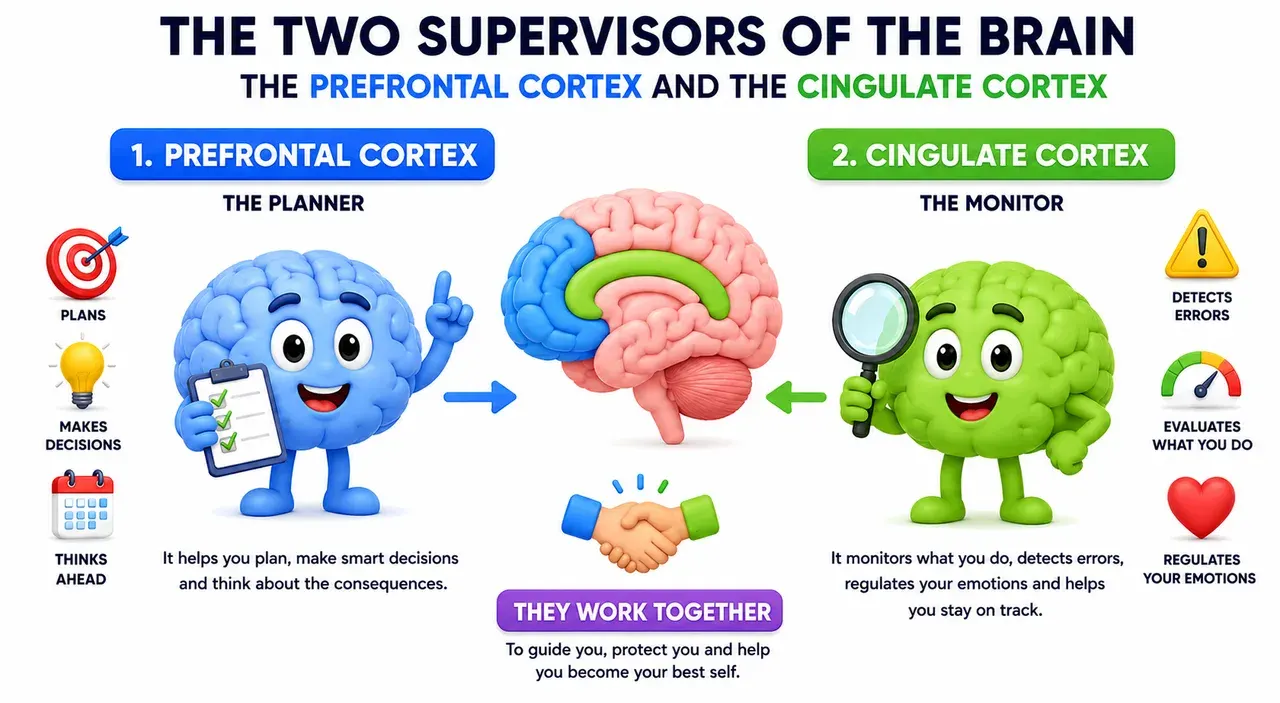
In everyday life, this network detects when something demands effort, weighs whether an action is worth it in the long run, and holds back immediate impulses. When you solve a maths problem or decide to study instead of going to a party, your control tower is running at full power.
Short-video platforms, by contrast, deliver a continuous stream of stimuli designed to entertain us immediately and effortlessly. The big question the researchers asked is a simple one: what does our control tower do when we enter this automatic consumption mode?
An adaptive «blackout» in the face of the «Like»
Using functional magnetic resonance imaging (fMRI), the study analysed the brain activity of 56 young adults while they watched short videos. The results revealed a clear pattern: when someone liked a video and watched it to the end, the control tower areas —the dorsolateral prefrontal cortex (dlPFC) and the dorsal anterior cingulate cortex (dACC)— showed a significant deactivation.
What does that mean? Far from being a lesion or brain damage, this «blackout» is a low-effort adaptation. The brain enters a state similar to flow, or complete immersion: entertained and sensing neither conflict nor any demand for reasoning, it switches off its supervisory mechanisms and stops spending energy on weighing consequences. In essence, it releases the handbrake.
Conversely, when a user disliked a video and chose to skip it quickly, the cingulate cortex raised its alertness slightly again in order to make the conscious decision to move on to different content.
The scientists also found that functional connectivity between the dACC and the dlPFC increased while preferred videos were playing. That explains how algorithms exploit this functional gap: by serving us content we are drawn to, they help the control network stay synchronised yet «disconnected» from its supervisory role.
Glutamate, the brain’s natural resistance
To understand why some people slip into this trance more easily than others, the researchers measured —using proton magnetic resonance spectroscopy— the resting concentration of glutamate within the grey matter of the anterior cingulate cortex.
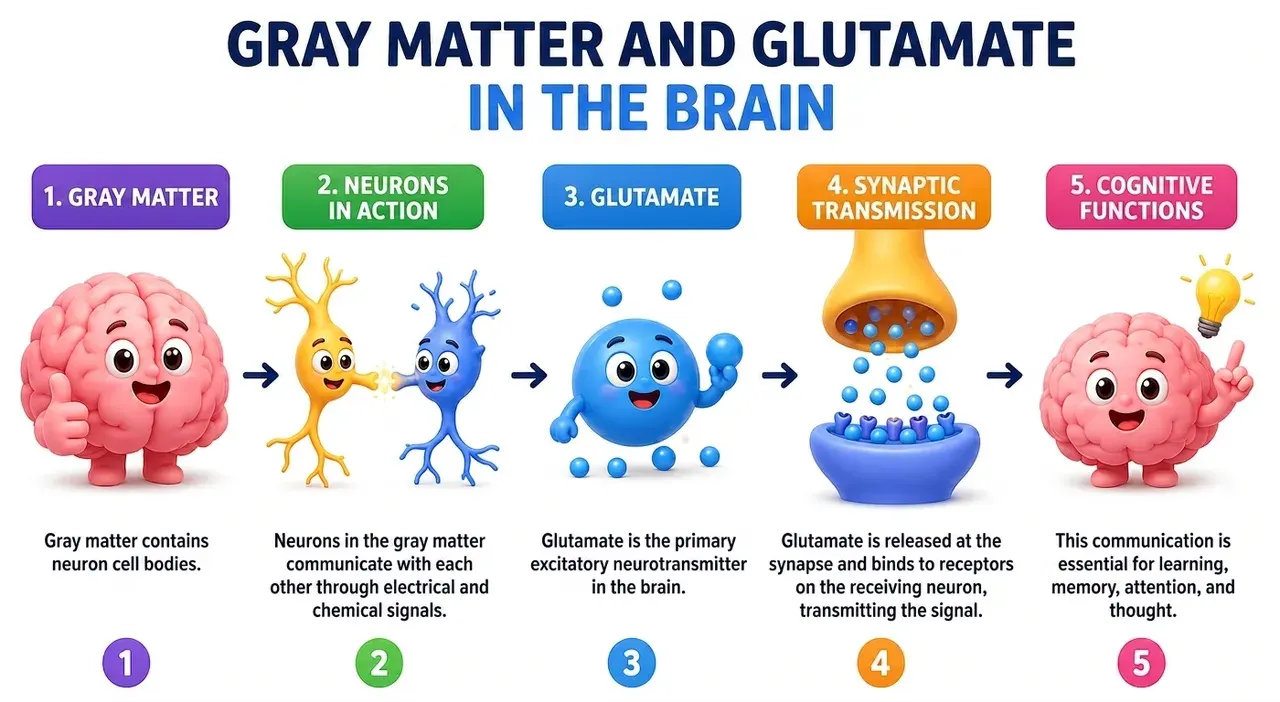
Grey matter is the layer of the brain where neuron cell bodies cluster and information is processed. It is there that glutamate acts as the most abundant excitatory neurotransmitter in the central nervous system. If the brain’s circuits were an electrical grid, glutamate would be the fuel that fires the neurons up to coordinate demanding tasks.
The results showed that it works as a natural resistance:
- More glutamate, less «blackout»: people with higher baseline concentrations in the grey matter of their control tower showed less deactivation of their self-control networks. Their circuits stayed more alert in the face of passive immersion.
- Less glutamate, deeper disconnection: those with lower levels of this neurotransmitter experienced a deeper suppression of their cognitive control network.
Glutamate seems to behave like a neurochemical spring: the more of it present at rest, the more alert the control network remains against passive immersion, offering a natural resistance to slipping into that automatic trance.
Can you raise glutamate by eating better?
Once you learn that glutamate helps keep the control tower awake, the question asks itself: is it enough to eat glutamate-rich foods —aged cheese, tomatoes, monosodium glutamate— to make the brain «immune» to the infinite scroll?
Neuroscience’s answer is a resounding no.
- The protective barrier. The glutamate we eat never reaches the brain: the blood-brain barrier prevents dietary glutamate from crossing into brain tissue. The brain synthesises its own glutamate locally, inside its cells, from glucose and other precursors.
- More is not always better. An uncontrolled excess of glutamate in the brain is harmful and can be toxic to neurons, a phenomenon known as excitotoxicity.
- It is a matter of balance. The concentration of glutamate in grey matter reflects an individual baseline trait, not a nutritional deficiency. What genuinely promotes neurotransmitter balance and brain health are habits: aerobic exercise, restorative sleep and consistent cognitive training.
Should we be worried?
The study makes clear that the deactivation of the control tower during video playback is not in itself a sign of neurological failure, but a mechanism by which the brain saves energy when it is enjoying entertaining content.
Even so, the authors themselves note that understanding this «autopilot mode» opens crucial questions for the future. The work looked at healthy young adults at specific moments, so it is fair to ask what happens if we expose the brain continuously, for hours on end, to this prolonged disconnection of its self-control circuits.
Strategies to «wake up» your control tower
Knowing that the infinite scroll temporarily switches off our mental handbrake helps explain why putting the phone down is so hard: it is not merely a lack of discipline, but a low-effort neurochemical state that the brain adopts gladly.
To counter the effect, neuroscience suggests introducing deliberate friction:
- Break the automation with physical pauses. The passive flow state rests on uninterrupted continuity. Time limits or in-app timers force the cingulate cortex to wake from its rest and actively reassess whether you want to keep going.
- Avoid the scroll before demanding tasks. Consuming this kind of content temporarily lowers the activity of the cognitive control network. Using these apps «for a moment» before studying or working leaves the brain in a low-effort state that makes starting complex tasks harder.
- Encourage active effort. Reading, solving problems or exercising stimulates the self-control circuits and supports metabolic homeostasis in the grey matter.
Next time you catch yourself trapped swiping the screen, remember that your control tower has simply taken a break. Recognising the process is the first step towards handing your brain back the controls of your own time.
References and scientific support
- The main study. Hong, T., Su, C., Zhou, H., Geng, F., & Hu, Y. (2026). Brain activity inhibition during Short Video Viewing: neurochemical insights. NeuroImage, 327, 121722. Read the study on PubMed
- The cognitive control network and effort. Botvinick, M. M., & Braver, T. S. (2015). Motivation and cognitive control: from behavior to neural mechanism. Annual Review of Psychology, 66, 83-113. Read the study on PubMed
- The anterior cingulate and conflict detection. Kerns, J. G., Cohen, J. D., MacDonald, A. W., Cho, R. Y., Stenger, V. A., & Carter, C. S. (2004). Anterior cingulate conflict monitoring and adjustments in control. Science, 303(5660), 1023-1026. Read the study on PubMed
- The neural basis of the flow state. Alameda, C., Sanabria, D., & Ciria, L. F. (2022). The brain in flow: A systematic review on the neural basis of the flow state. Cortex, 154, 348-364. Read the study on PubMed
- Prefrontal deactivation during flow. Ulrich, M., Keller, J., Hoenig, K., Waller, C., & Grön, G. (2014). Neural correlates of experimentally induced flow experiences. NeuroImage, 86, 194-202. Read the study on PubMed
- The block-design confirmation. Ulrich, M., Keller, J., & Grön, G. (2016). Neural signatures of experimentally induced flow experiences identified in a typical fMRI block design with BOLD imaging. Social Cognitive and Affective Neuroscience, 11(3), 496-507. Read the study on PubMed
- Resting glutamate predicts the brain’s response. Falkenberg, L. E., Westerhausen, R., Specht, K., & Hugdahl, K. (2012). Resting-state glutamate level in the anterior cingulate predicts blood-oxygen level-dependent response to cognitive control. PNAS, 109(13), 5069-5073. Read the study on PubMed
- GABA, glutamate and neural activity. Duncan, N. W., Wiebking, C., & Northoff, G. (2014). Associations of regional GABA and glutamate with intrinsic and extrinsic neural activity in humans. Neuroscience & Biobehavioral Reviews, 47, 36-52. Read the study on PubMed
- The precedent on personalised videos. Su, C., Zhou, H., Gong, L., Teng, B., Geng, F., & Hu, Y. (2021). Viewing personalized video clips recommended by TikTok activates default mode network and ventral tegmental area. NeuroImage, 237, 118136. Read the study on PubMed
We're building the space for you to comment on the articles.
Continue reading

Procrastination and the limbic hijack
Neuroscience shows that procrastination is not a lack of willpower or organisation, but a defence mechanism for regulating frustration

The (harmful) obligation to socialize
Why forcing extroversion wears down the nervous system, and why protecting your mental energy is an act of health